Raising Children 👧🏻👦🏽 or Raising Ourselves?
Dearest Readers,
It has come to my most attentive observation that the greatest challenge in life is not in gazing outward upon the world’s endless spectacles 🌍, but rather in turning one’s discerning eye inward 🔍. Why, I ask, is it so dreadfully difficult to reflect upon one’s own flaws? Why does the bitter taste of feedback prove harder to swallow than the most unsavory of tonics? 💊
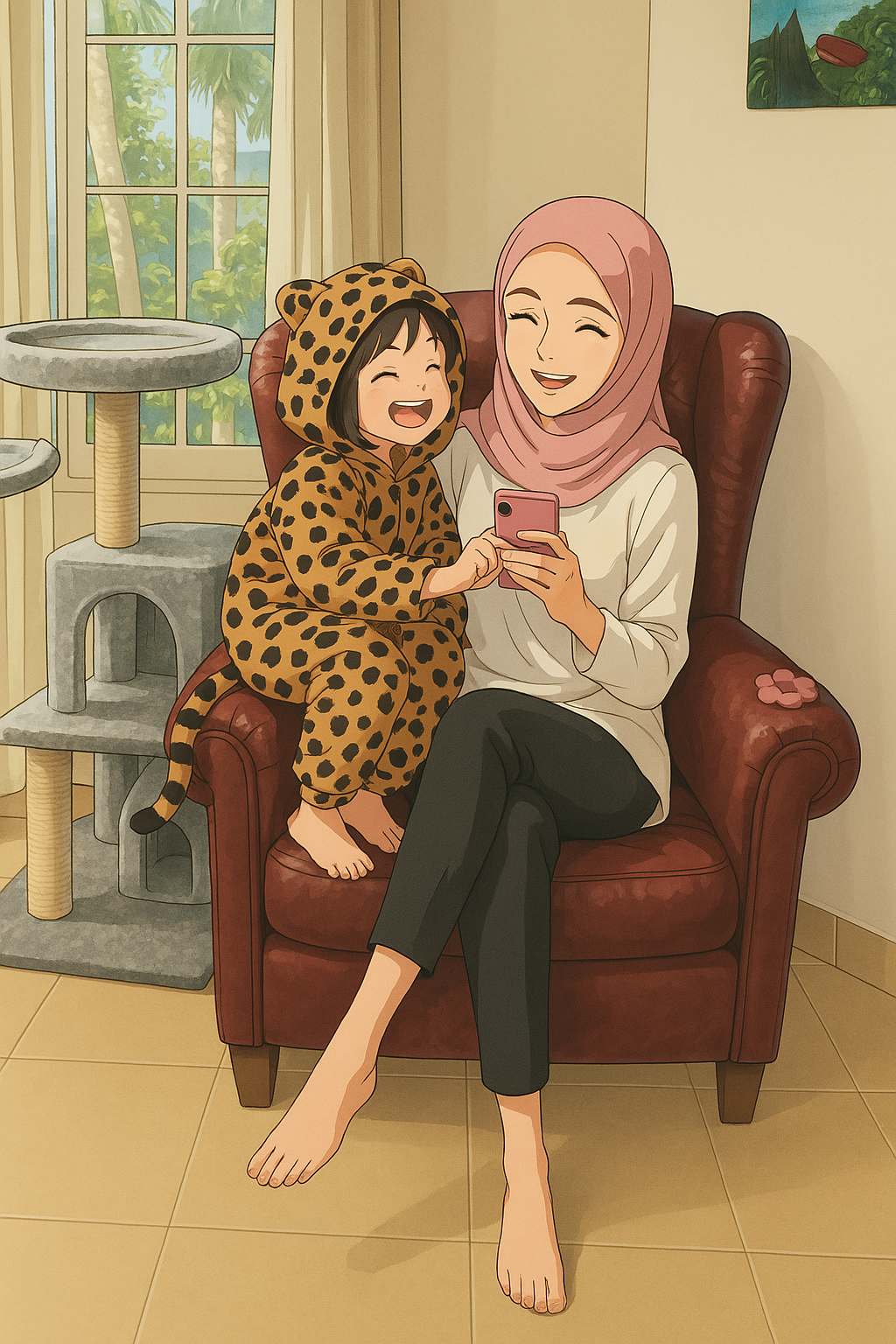
Me & my Bean 🐆
Perhaps, dear reader, it is because looking outward is ever so delightful. The world offers us dazzling distractions 🎭, tantalizing diversions 📱, and tangible pursuits that occupy our time. Humanity, after all, has been conditioned by centuries of survival instincts—our ancestors were ever-vigilant, seeking safety from danger ⚠️, sustenance 🍇, and social standing 🏆. This, I dare say, has left us all with a rather inconvenient habit of avoiding self-reflection.
💤
Indeed, our very minds have been fashioned to process the external far more swiftly than the internal. It is far simpler to revel in the approval of others 👏, to navigate the complexities of society, than to sit in quiet contemplation of our own imperfections 🤔. But, dear reader, let us not be deceived—true transformation requires an unwavering stare into the looking glass 🪞, even when the reflection is less than flattering.
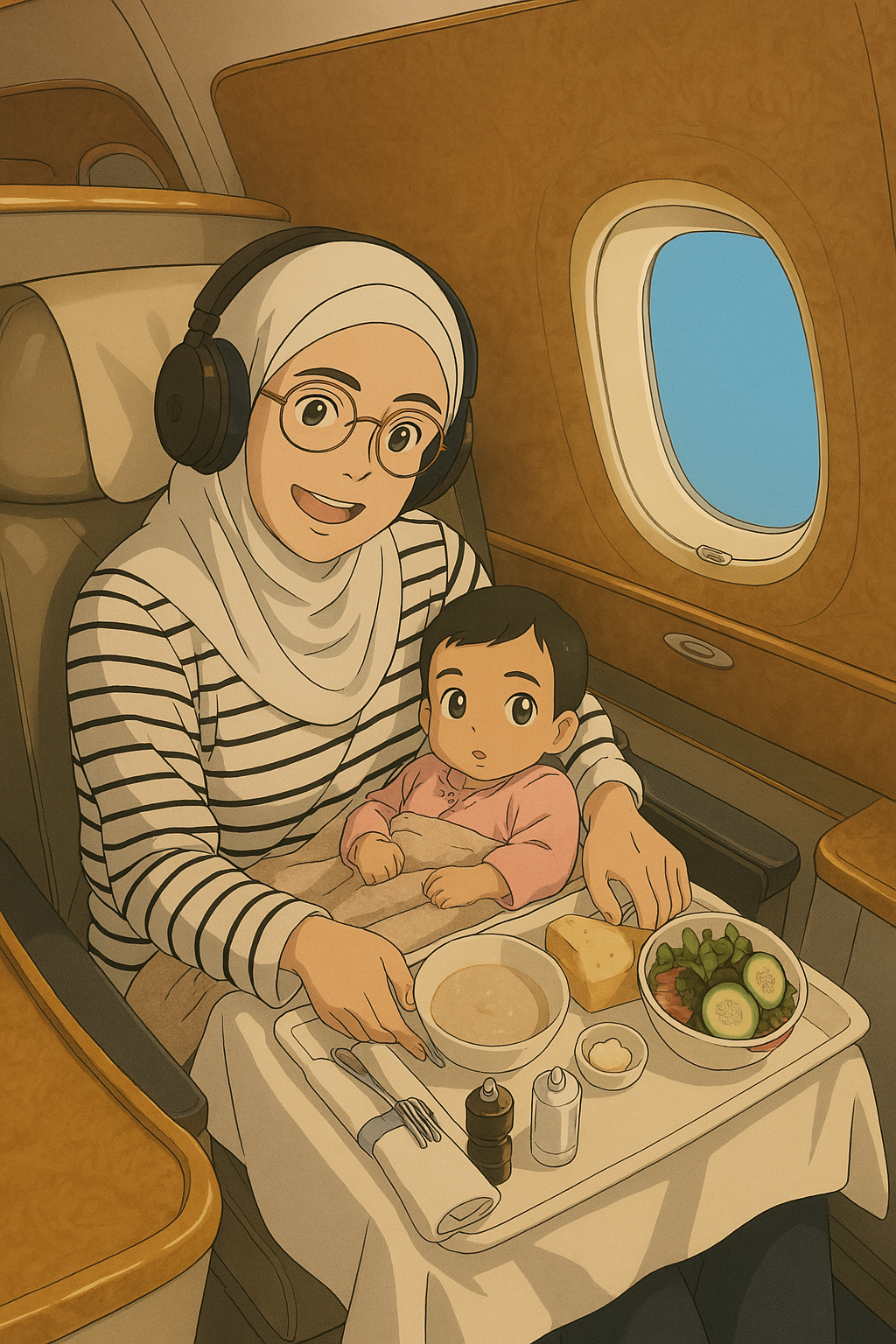
🛩
And so, I must confess that motherhood has forced even yours truly into an unexpected reckoning. For how, pray tell, can one raise fine young ladies when one has yet to master oneself? To be a mother of the highest order requires not merely love ❤️, but discipline 🧘♀️, patience 🕰️, and an unshakable will.
Ah, but therein lies the cruelest truth! It is not the children who cause our impatience, our distress, our sleepless nights—it is our own shortcomings that betray us 😔. We may fancy ourselves grand heroines, gallivanting about like the most picturesque of mothers 🦸♀️, but true heroism is not found in appearances. It is found in the quiet moments of change, in the commitment to be better—not just for our little ones 👧🏻👧🏽 but for ourselves.
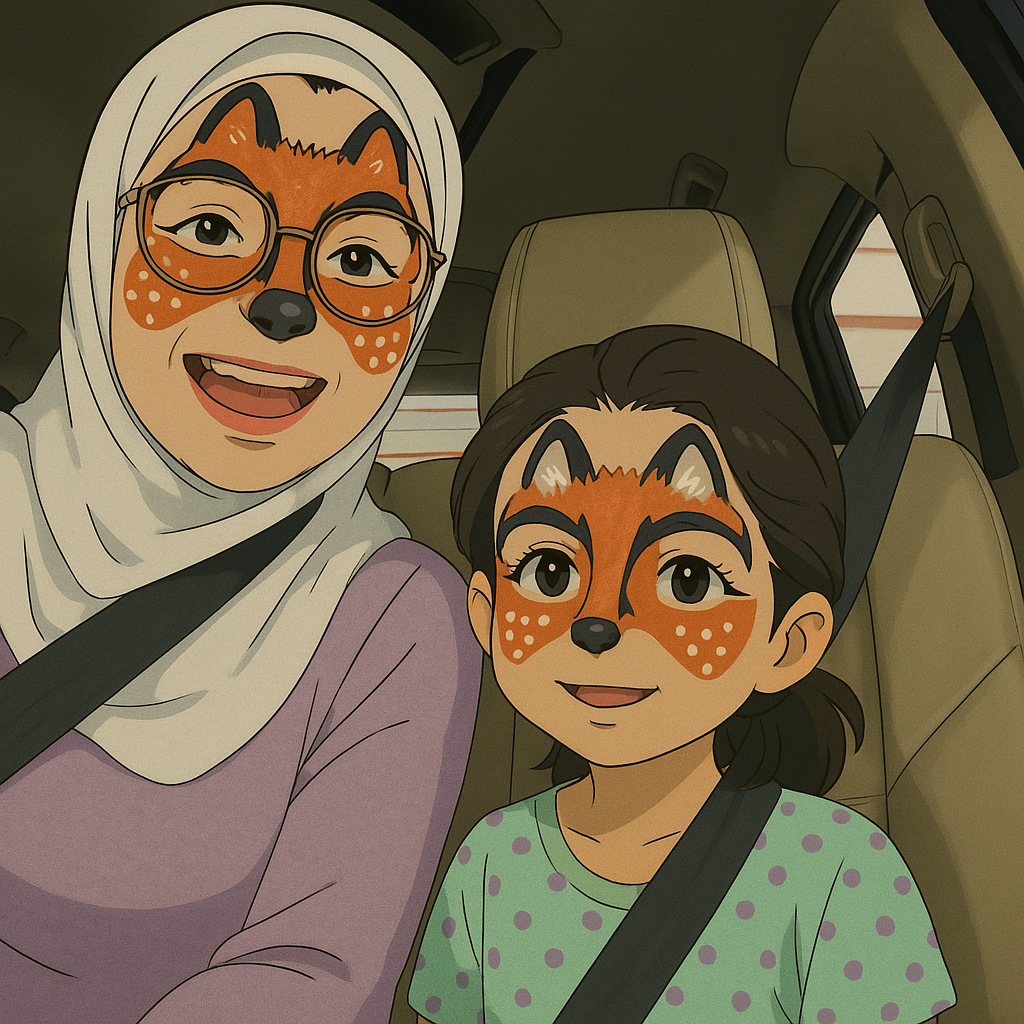
The darlings of our households are, in truth, the purest among us ✨. They are not in need of correction; they merely require a haven in which to grow and thrive 🏡. And yet, how often do we parents declare, “I am weary because of the children 😩,” or “I am stressed because of the mess 🧹,” or, worst of all, “I did this for you 😤.” As if, dear reader, raising them were some noble sacrifice rather than the highest of honors 🎖️.
In certain esteemed cultures, such as those of my own (Arab) and my beloved husband’s (Indian) 🌍, it is whispered that children owe their parents an eternal debt. But let me set the record straight: my daughters owe me nothing. I, however, owe them everything 💖.
A tantrum is not an imperfection 😭, nor is a messy room a grand offense 🧸. It is I who must change. It is I who must grow 🌱. For it is not “me OR the children,” but rather “me, FOR the children.” And so, with each passing day, I endeavor not just to parent but to evolve—not merely for them, but for myself, for my husband, and for this grand adventure we call motherhood.
Some say that old habits die hard ⏳, but I dare argue: when a woman becomes a mother, she too is reborn 👶. This is our moment to begin anew, to rise to the occasion, to become the very superheroes our children believe us to be. Capes, of course, are optional. 🦸♀️✨
Yours most truthfully,
Huda 💖